
Behind every good AI model is the army of construction contractors who build it. The latest releases from Anthropic or OpenAI might make the headlines, but one of the largest physical infrastructure buildouts in modern history enables all the models. This infrastructure extends beyond GPUs and data centers. It depends on power, water, and civil infrastructure at a scale that simply does not exist today. This is a once-in-a-generation opportunity for civil contractors who build these assets, but it requires the ability to execute safely and profitably to meet increasing demand.
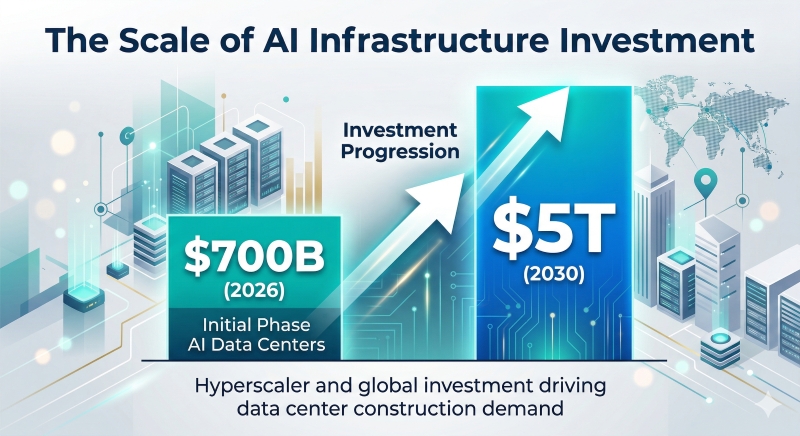
The opportunity is not small. According to McKinsey & Co, annual hyperscaler capital expenditures are projected to reach nearly $700 billion by 2026. Global investment could potentially hit $5 trillion by 2030. This capital supercycle is the largest since the railroad boom of the 1880s, and it has already dwarfed the recent Infrastructure and Jobs Act. In today's dollars, the top hyperscalers are spending nearly as much as the entire global oil industry did at its 2014 peak. I remember that time fondly because I was working in project controls for a major oil company at the time. This new capital cycle makes me very optimistic about the current moment, both for the civil contractors we work with at HCSS and for my own son, who is just now starting his career in the construction industry. This is our time!
The Infrastructure Powering Data Center Construction
“For us, it’s a busy time,” says Wyatt Williams, Project Controls and Estimating for Crux Subsurface. “A lot of data centers are going up, and it keeps us busy. Right now, they have to run a lot of power lines, and there’s been a lot of growth across the country.”
So what is all this physical infrastructure we’re talking about? It’s not just data centers; it’s a complex supply chain of power, water, and semiconductor facilities as well.
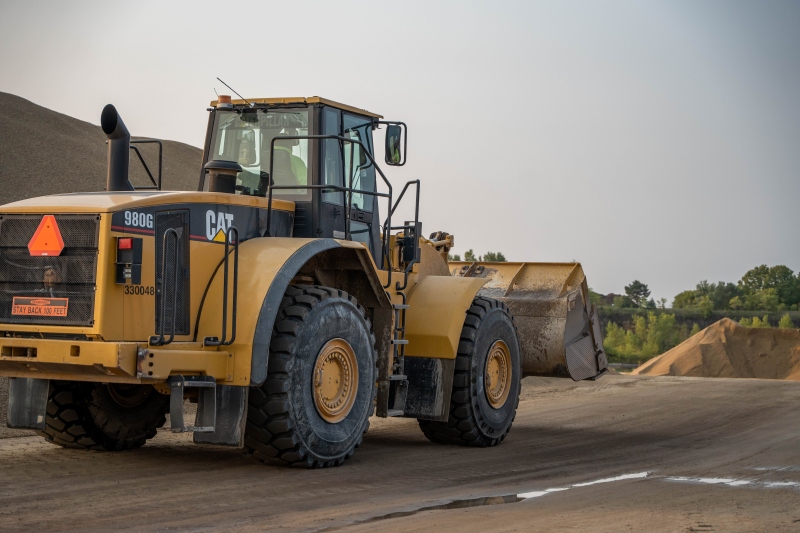
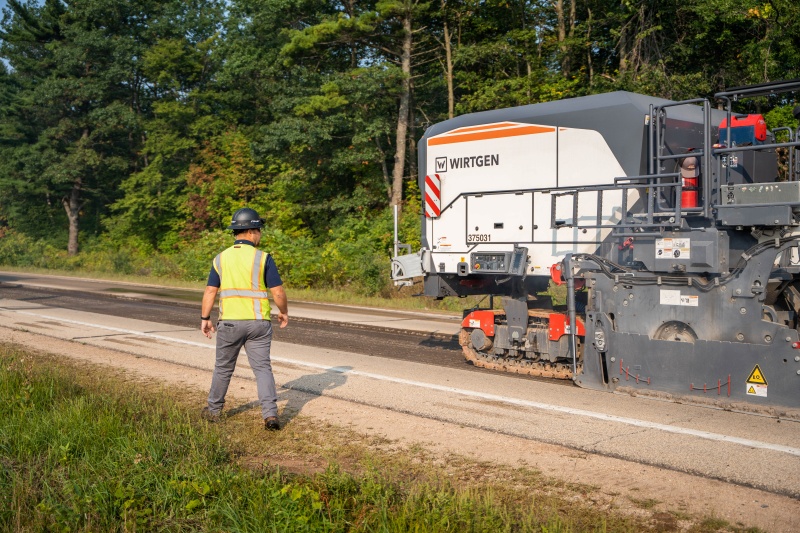
Data centers are where the lion's share of construction spending is happening. According to Colliers, global data center investment totaled over $580 billion dollars in 2025. Civil construction is the foundation (pun intended) of the data center. This includes earthwork, extra-thick slabs, super flat floors, and vibration isolation. It includes access roads and stormwater control. This is the area where our civil contractors excel, and the data center buildout is hugely benefiting from their expertise.
The Role of Civil Construction
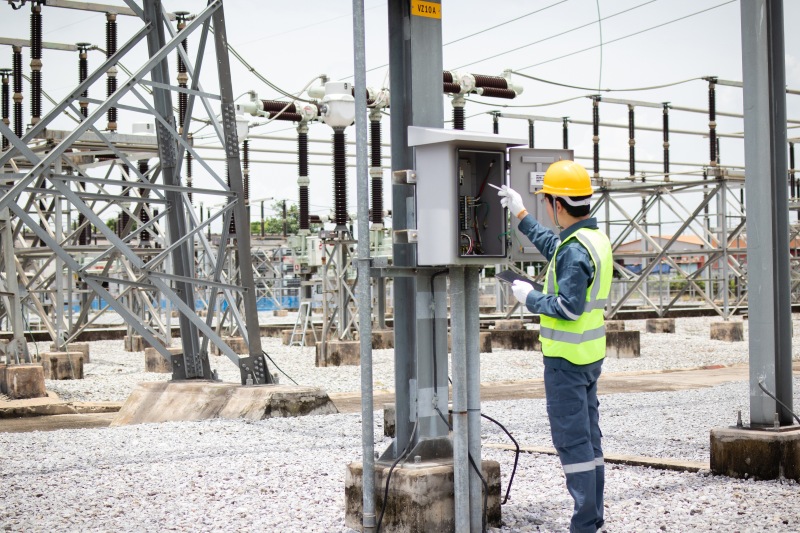
Power infrastructure comprises 40–50% of project costs, according to Colliers. It’s a critical bottleneck and a major driver of this capital cycle. By 2035, Deloitte estimates that power demand from AI data centers in the United States could grow more than thirtyfold, reaching 123 gigawatts, up from 4 gigawatts in 2024. OpenAI’s Stargate alone is projected to require 10 GW of capacity, equivalent to peak demand for New York City.
To supply this power, developers will need to bring new generation online, including solar, natural gas, nuclear, and more. Some of this will happen onsite, but much of it will come from the grid, requiring transmission and distribution infrastructure, including substations and utility-scale storage. For contractors managing this kind of utility work at scale, connected field-to-office workflows become increasingly important. This is all happening at the same time as major projects to address wildfire risk, protect critical infrastructure, and adapt to the trend towards renewables and electrification. Needless to say, contractors in the power utilities industry are extremely busy.
The Realities of AI Infrastructure: Risks, Resources, and Supply Chains
While this is an incredible opportunity for contractors, it is not without risk. Perhaps the greatest public concern about AI is the impact on ratepayers. Corporations have made substantial commitments to ensure that hyperscalers foot the bill for additional power, in some cases lowering rates for the general public through value-added infrastructure.
Another major risk is supply chain constraints. Something as simple as a shortage of electrical switchgear could expose the $5 trillion forecast to be more aspirational than planned. But if there’s one thing we learned in the early 2020s, supply chains are incredibly adaptable when the demand is real.
Water and Cooling Infrastructure
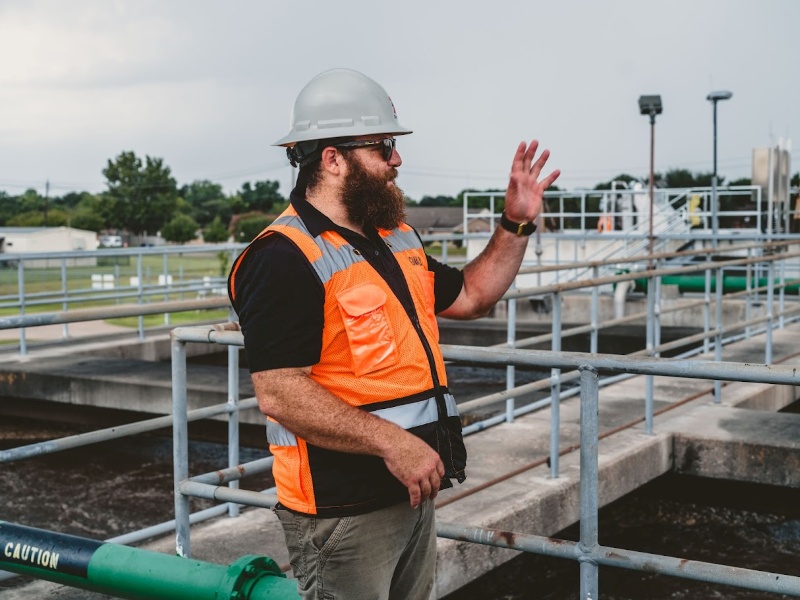
Water infrastructure and wet utilities get less public attention but are equally important. Large AI models are trained on thousands of powerful, heat-intensive processors. They require sophisticated cooling systems to prevent overheating and equipment failure. For this to work, operators must source water through potable mains, reclaimed water systems, or onsite reservoirs.
Teams must purify and distribute the water through piping systems and pump houses, then recycle it. Engineers are rapidly advancing data center cooling technologies, but orbital data centers with radiative cooling are still a speculative technology. The need for wet utilities and onsite water infrastructure will be critical for the foreseeable future.
Finally, it’s worth noting that data centers represent just one piece of the broader AI infrastructure landscape. While they are the physical brain of AI, the semiconductor sector is the area with the most media and investor attention. That is to be expected when the top maker of GPUs becomes the largest company in the S&P 500, and the only major manufacturer of lithography machines becomes the top company in the STOXX Europe 600.
My own small city, Boise, Idaho, is home to a $15 billion DRAM fabrication facility, which will hopefully address a critical memory bottleneck in the future of AI. It goes without saying that construction contractors don’t manufacture chips or memory, but they build these incredibly complex and high-performance facilities.
How Construction Technology Helps Contractors Manage AI Infrastructure Projects
Jimmy Barnett, Senior Estimator with HEI Civil, appreciates HCSS because “it allows us to be more successful with projects that may be higher risk,” he says. “Data centers are a really good example. We like those types of projects. When we present that information, and we have real-time data we can present to the client on recent projects, that gives them validity to understand that everything we're doing day in, day out has real, true facts behind it.”
As novel as these projects are, the challenges they pose for contractors are very familiar. Those challenges include coordinating complex infrastructure work across crews, work orders, billing, and field data. Contractors need accurate, competitive estimates to bid on and win these projects, along with real-time field data. This includes labor, equipment utilization, physical progress, and the performance of supply chains and subcontractors. They need a reliable fleet of heavy equipment, maximizing uptime and utilization to maximize revenue from these valuable assets.
Executing Successfully on Data Center Projects
To stay competitive on data center construction projects, contractors need better visibility, coordination, and control. This is where technology like HCSS comes in:
- Estimating & Bidding: HeavyBid has been the standard in civil construction for 40 years, helping contractors increase revenue by generating more accurate, competitive bids.
- Project Controls: Managing labor and productivity in the field is the heart of project controls. HeavyJob enables contractors to control the job site through field data capture, including time cards, productivity metrics, and daily reports. Plans and documents are connected to change control workflows within the mobile app, so crew leads can manage the project in real time.
- Safety: A project is only truly successful if everyone goes home safe. Meetings, observations, JSAs, and inspections are much more likely to be completed and documented when workflows are embedded in the same app the crew already uses for most daily tasks.
- Fleet Management: Heavy equipment is the lifeblood of a civil contractor. HCSS Fleet helps contractors manage preventive maintenance schedules, address field service work orders, and maximize uptime and utilization. Much of this is automated through advanced telematics and real-time equipment data integrated across the HCSS platform.
“The foremen, they like the connectivity,” comments Williams from Crux Subsurface. “We do jobs all over the country. Having everybody connected and looking at one source keeps everybody up to date as far as the paperwork goes. You’re not having to reprint stuff every time.”