

Your estimate history, working for you
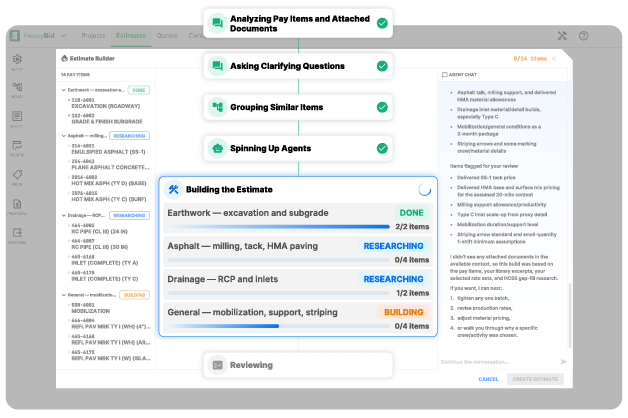
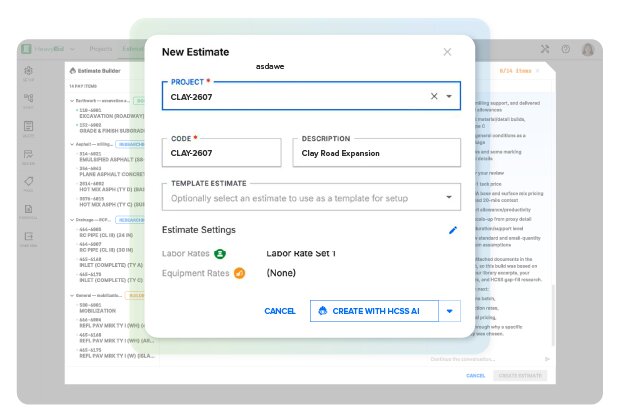
Estimate Builder uses your historical HeavyBid estimating data and HCSS libraries to create a first-pass estimate in minutes, so your team starts with a relevant draft instead of a blank screen.
You stay in control, from first draft to final bid
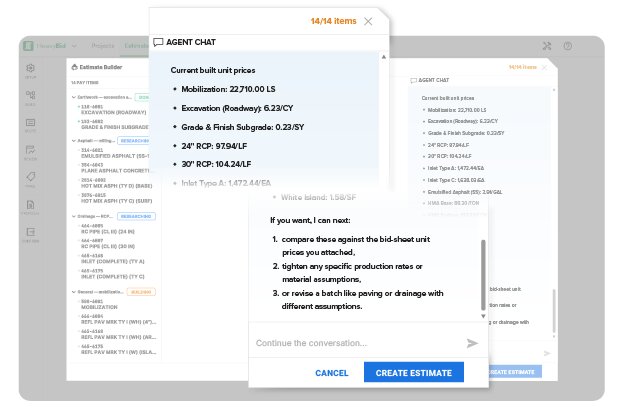
AI-generated values are clearly flagged for review alongside the data behind them. Your existing rates take precedence, and you review, adjust, and finalize the estimate before it becomes part of the bid.
Shaped around how your team already bids
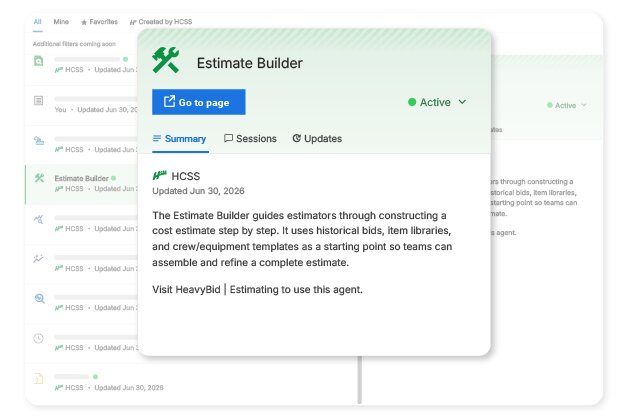
Configure Estimate Builder through the HCSS AI Studio, adding your own business instructions and estimating standards, so the agent reflects how your company bids work.
Frequently asked questions
What does the Estimate Builder Agent actually do?
It drafts a first-pass estimate from a list of pay items, using your own historical estimating data from HeavyBid and the HCSS libraries you already rely on. You review, adjust, and finalize from there.
Will it replace my estimators or take over the bid?
No. It gives estimators a faster starting point while keeping them in control. AI-generated values are flagged for review, your existing rates take precedence, and your estimator makes the final decisions.
Where does the data come from, and is it secure?
Estimate Builder draws on your company’s own estimate history and the HCSS libraries you use today, along with any business instructions or estimating standards your team has configured in the HCSS AI Studio. Your data is protected with Enterprise security, siloed to your company only, and never used to train AI models. Also, it follows the same role-based permissions already in place across the platform.
Can I customize how the Estimate Builder works for my business?
Yes. The Estimate Builder is configured through HCSS AI Studio, where you can add your own business instructions and company knowledge, like your specific estimating standards, so the agent reflects how your team actually bids.
When can I try it?
The Estimate Builder Agent enters beta in the fall of 2026 with general availability in early 2027.
See what's next for estimating.
Explore HCSS AI